Water and Food
Water
1 gallon per person per day, for at least 3 days — more if you have pets. Store in sealed containers, replace every 6 months.
Food
3 days of non-perishable food that doesn't need cooking — canned goods, protein bars, peanut butter, crackers. Include a manual can opener; it's the item people forget most.
Power and Communication
Flashlight and Batteries
One flashlight per household member, plus spare batteries. Skip candles where possible — they're a leading cause of post-storm house fires.
Portable Power Bank
Keep at least one fully charged at all times, not just when a storm is forecast. Your phone is your alert system, flashlight, and communication line all at once — it's the single most important thing to keep powered.
NOAA Weather Radio (Optional but Useful)
Works when cell towers and internet don't. Not required if your phone stays charged and you have a reliable alert app, but a reasonable backup for areas with unreliable service. Full breakdown →
First Aid and Medications
First Aid Kit
Bandages, gauze, antiseptic, pain relievers, tweezers. A basic pre-made kit covers this — check the expiration dates once a year.
Prescription Medications
At least a 7-day supply, kept with your kit or easy to grab on the way out the door. This is the item most commonly left behind in an evacuation.
Documents and Cash
Keep copies of ID, insurance policies, and medical information in a waterproof bag or a cloud folder you can access from your phone. Include some cash in small bills — card readers and ATMs don't work without power.
Don't Forget Pets and Kids
For Pets
3 days of pet food, a spare leash or carrier, any medications, and a recent photo in case you're separated. Many emergency shelters won't take pets without proof of vaccination — keep those records with your kit.
For Kids
A comfort item, any needed formula or diapers, and a card in their pocket or backpack with your name and phone number — useful if you get separated during a chaotic evacuation.
Where to Actually Keep It
A kit that's scattered across the house isn't a kit — it's a scavenger hunt during an emergency. Store everything in one clearly labeled, easy-to-carry container (a duffel bag or plastic tote) somewhere you can grab it on the way out: a hall closet, mudroom, or by the door to your garage. If you have a designated tornado safe room, keep a smaller version of the kit there too, since you may not have time to grab the main one on your way to shelter.
Sizing Your Kit to Your Household
The standard checklist assumes one adult; scale it up deliberately rather than eyeballing it. Multiply water and food quantities by the actual number of people (and pets) in your household, not just the number of bedrooms. If anyone in the home uses a mobility aid, hearing aid, or medical device, add spare batteries or a backup power source sized to that specific device — generic kit batteries rarely match. Households with infants need to plan around formula and diaper supply separately from the adult food ration, since a 3-day adult supply and a 3-day infant supply look nothing alike in volume.
Rotating and Maintaining the Kit
A kit assembled once and never touched again quietly expires. Set a recurring reminder — many people tie it to the twice-yearly clock change — to check expiration dates on water, food, and medications, replace batteries, and confirm the power bank still holds a charge. Re-check that stored documents (insurance policy numbers, medication lists) are still current, especially after a move, a new prescription, or a new pet. A kit that's five years out of date can be more dangerous than no kit at all, since it creates false confidence.
Frequently Asked Questions
Do I need a separate kit for my car?
Yes, ideally a smaller version — water, a flashlight, a phone charger, gloves, and a blanket, since a stranded-vehicle scenario (winter storm, flash flood road closure) is a different situation than sheltering at home.
How much does a full kit cost to put together?
A basic household kit for one adult typically runs $75–$150, mostly water, non-perishable food, and a first aid kit — most of it items you likely already own and just need to consolidate into one place.
Is bottled water better than storing tap water myself?
Either works. Store-bought sealed water needs no preparation; if you store tap water yourself, use food-grade containers, and replace it every 6 months since taste and quality (not safety) degrade over time.
What's the single most commonly forgotten item?
A manual can opener and a week of prescription medication are the two most frequently missing items in real post-disaster surveys — both are easy to overlook because they're not dramatic, but their absence is a real, immediate problem.
Know Before It Hits
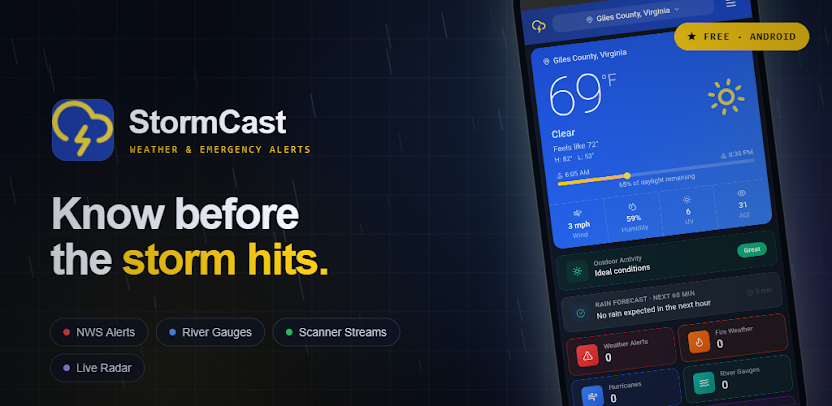
None of this matters if you don't know a storm is coming in time to use it. StormCast pushes a notification the moment a warning is issued for your location.

More from the Blog
A note on this guide: This is general safety information, not medical or professional emergency advice, and specific criteria can vary by region. In an actual emergency, call 911 and follow instructions from local officials and the National Weather Service.